
The report by the High Level Advisory Group said India stands to benefit even more when the US and China are locked in a global trade war.
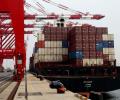
Introduced in 2015 under the Foreign Trade Policy, the mega MEIS was created out of a merger of five existing reward schemes.

The proposed policy is increasingly becoming an item of negotiation, as the US pushes hard to change India's stance.

Among the current FTAs with significant trade deficits for India, five are with countries from the 10-nation Asean bloc. Exports to the 10 economies stood at $ 37.4 billion in 2018-19, up by 9% year on year. On the other hand, imports were higher at $ 59.31 billion, up by 25% from the previous year's $ 47.13 billion.
The e-commerce companies believe the government is using this exercise to take an unauthorised look into their financials, shareholding and operations.
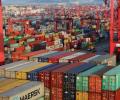
ICT products make up a minuscule $ 407 million, out of the $ 35.54 billion of total inbound shipments from the US, as of now.

Mastercard recently launched an authentication product called Identity Check Express that enables customers to verify transactions on their own.

The plan includes step-wise expansion of a crucial credit guarantee net, establishment of an unprecedented number of functional clusters and increased government procurement from MSMEs.

Three years and Rs 28,710 crore worth of transactions later, it has more than double the number of sellers than Flipkart.
According to data released by the commerce and industry ministry, exports stood at $25.01 billion in the month. The fall is only the second time exports contracted in the past year.

Emirates and Etihad Airways have over the past year continued to lobby India to allow them more flight slots, which won't be possible until the 2007 pact is revised.

However, in recent times, the clout that trader bodies such as CAIT and other organisations like Swadeshi Jagran Manch and Laghu Udyog Bharati has is steadily increasing. Earlier this year, trader bodies were able to convince the government not to extend the deadline for implementation of the new norms in FDI policy on e-commerce.

The commerce department has said that earnings through the new tax will equal the losses faced by Indian industry after the US tariffs on steel and aluminium.
While the UN report said that FDI inflows rose 6 per cent in 2018 to $ 42 billion, the government's own data for the entire FY19 period has shown that inbound equity investments declined for the first time in six years in FY19.

Work on a dozen decisions to start by next week.

Particularly hit has been the apparel sector, where the time taken by the industry to adjust to the Goods and Services Tax regime, downward revision of export incentives, and a credit squeeze faced by small and medium scale enterprises, has pushed production downwards.
According to CAIT, e-commerce policy should take within its ambit not only foreign players but also domestic ones.
The meet will see Goyal batting for structural reforms at the WTO, where India has repeatedly called for reforms, especially in the dispute resolution mechanism that has effectively been held hostage by the US.
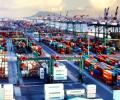
100-day agenda: Commerce ministry pushes for separate logistics department
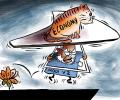
There is talk of a fresh approach to a new labour code as well as reforming land acquisition laws in such a way as to be politically.
 © 2026 Rediff.com - Investor Information - Advertise with us - Disclaimer - Privacy Policy - Sitemap - Feedback - About us - Terms of use - Grievances